
NAROC--The Voice of Retail Optical.
The National Association of Retail Optical Companies (NAROC) is the premier trade association representing retail optical companies operating more than 10,000 locations across the United States. We advocate before federal and state legislators, regulators, and policymakers to advance policies that expand consumer access to high-quality, affordable vision care. Our members serve millions of Americans every year--and NAROC ensures their voice is heard where it matters most.
Advocating for the Retail Optical Industry Since 1959


About NAROC
The National Association of Retail Optical Companies (NAROC) was incorporated in 1959 (initially as the National Association of Optometrists and Opticians) with the founding commitment that remains at the heart of everything we do: ensuring that all Americans have access to high-quality, affordable, and convenient eye care, free from unnecessary regulatory barriers.
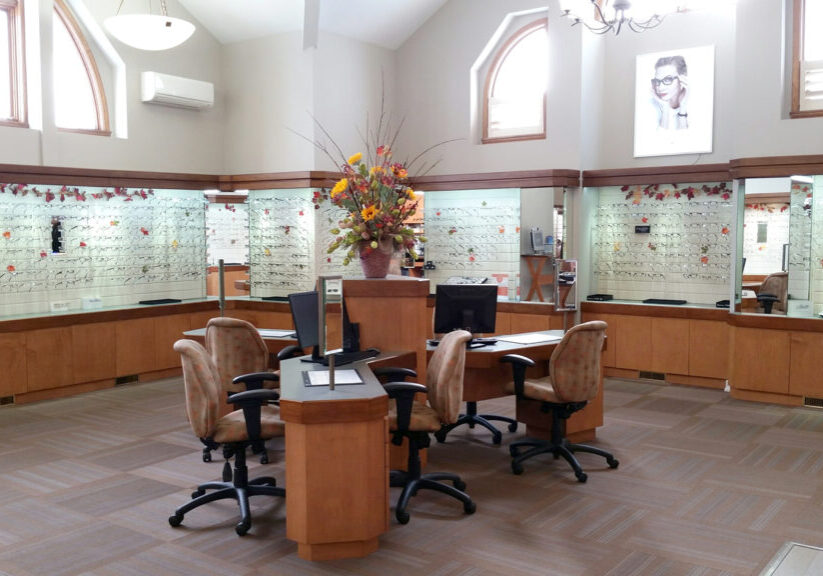
Today, NAROC members operate more than 10,000 of the approximately 44,000 retail optical locations across all 50 states and Puerto Rico, employing thousands of skilled opticians and other trained vision care professionals. These specialists do more than fill prescriptions—they help patients select, fit, and adjust eyeglasses and contact lenses, translating each prescription into a customized eyewear solution built around the patient’s individual needs.
Most member locations include co-located optometry practices where affiliated optometrists provide comprehensive eye exams, prescribe corrective eyewear and offer other medical eye care--a model that brings together the full spectrum of vision care services under one roof for the convenience of patients. Most affiliated optometrists operate as independent contractors, while some are franchisees or are employed by member companies or other doctors. Optometrists practicing at these locations help identify serious ocular and systemic conditions--including but not limited to diabetes, hypertension, macular degeneration and glaucoma--providing eyewear and vision care services to more than 48 million Americans each year.
NAROC members also serve patients through a growing range of care delivery models, including ocular telehealth, remote care platforms, and online sales channels. Retail optical companies operate fabricating laboratories to create customized prescription eyeglasses both onsite and at regional and central facilities.
Our Mission
NAROC advances the interests of retail optical companies and the patients they serve by:
- Expanding access to vision care. Advocating for policies that make high-quality, affordable eye care available to all Americans, wherever they live and however they choose to access care.
- Embracing innovation in care delivery. Supporting the responsible expansion of ocular telehealth and remote care models that extend the reach of eye care professionals and improve outcomes for patients.
- Promoting the responsible and ethical use of artificial intelligence. Engaging with legislators, regulators, and policymakers to ensure that AI tools used in vision care diagnostics and patient management are deployed safely, transparently, and in the best interests of patients.
- Defending fair competition. Protecting the public interest by opposing special-interest legislation and regulation designed to restrict competition, limit care modalities, or reduce consumer choice.
- Supporting workforce excellence. Promoting continuing education, professional development, and training programs that elevate the standard of care delivered across our members’ locations.
What We Do
NAROC is active at the state and federal level on the issues that matter most to retail optical companies and their patients. Our ongoing work includes:
- Monitoring and engaging in legislative and regulatory proceedings across all 50 states and before federal agencies, including the Federal Trade Commission, the Food and Drug Administration, and the Department of Health and Human Services.
- Advocating for telehealth frameworks that allow eye care professionals to deliver remote and asynchronous eye care services without unnecessary barriers.
- Developing policy positions on the ethical and responsible use of artificial intelligence in healthcare, including diagnostic tools, patient communications, and clinical documentation.
- Opposing regulatory efforts that limit access to care or reduce competition in the vision care market.
- Providing members with timely intelligence on legislative and regulatory developments affecting their businesses and patients.
10,000+
Retail Optical Stores Nationwide
48 Million+
Americans Treated Annually
Ongoing efforts by our Government Relations and Telehealth Committees and focused project work serve as the backbone that allows the Association to effectively pursue its mission. Each promotes the work and visibility of the NAROC and provides critical information and decision-making tools to its members, legislators and regulators. Both also provide opportunities to move on projects that enhance the reputation of the Association and optical retail sector as well as protect the strides made over the last few decades.
NAROC SUPPORT FOR VISION CARE PROFESSIONALS

"The NAOO has consistently been a strong advocate for consumers and competition; its efforts have allowed innovative eye care professionals and ophthalmic industry members to grow the category, offer a variety of quality products and services at a wide range of prices and improve access to eye care and eyewear in the US. The NAOO has supported changes in laws in order to allow doctors, opticians and retailers to advertise the price and availability of eye exams, eyeglasses and contact lenses.
The organization was instrumental in making sure that patients get their prescriptions for eyewear so they can shop where they choose. The NAOO has helped reduce unfair and unreasonable limits on eye care availability in retail locations, including malls and department stores. Today, the NAOO is a leader in ensuring that ocular telemedicine is available as a valuable tool for doctors and a great benefit to consumers."
Wallace W. Lovejoy
Optical Industry Executive, Pearle Vision, LensCrafters/Luxottica, 1983-2011
Principal, Lovejoy Eyecare Consulting since 2012
"The optical industry is unique in its mix of industry participants and business models, regulations and economic turf issues. The NAOO, over the decades, has proven to be a unifying force in the retail optical segment, which has been under frequent attack from the disparate segments of the industry. The old saying of “United we stand…” has proven so true in the industry and the NAOO has been a reliable source of information about and support for our segment of the industry over the decades."
Franklin D. Rozak
Optical Industry Executive, Cole Vision, 1971-2015
Become a NAROC Member
NAROC members represent in excess of 10,000 retail optical stores throughout the United States. Through the Association, those organizations are advocating for fair competition, expanding patient access and ensuring that optometrists and opticians can deliver superior care without regulatory burden.
How can your organization contribute to our important mission?